2026-10-10 · Mike Sullivan
Common AC Short Cycling Issues in Boulder City Summers
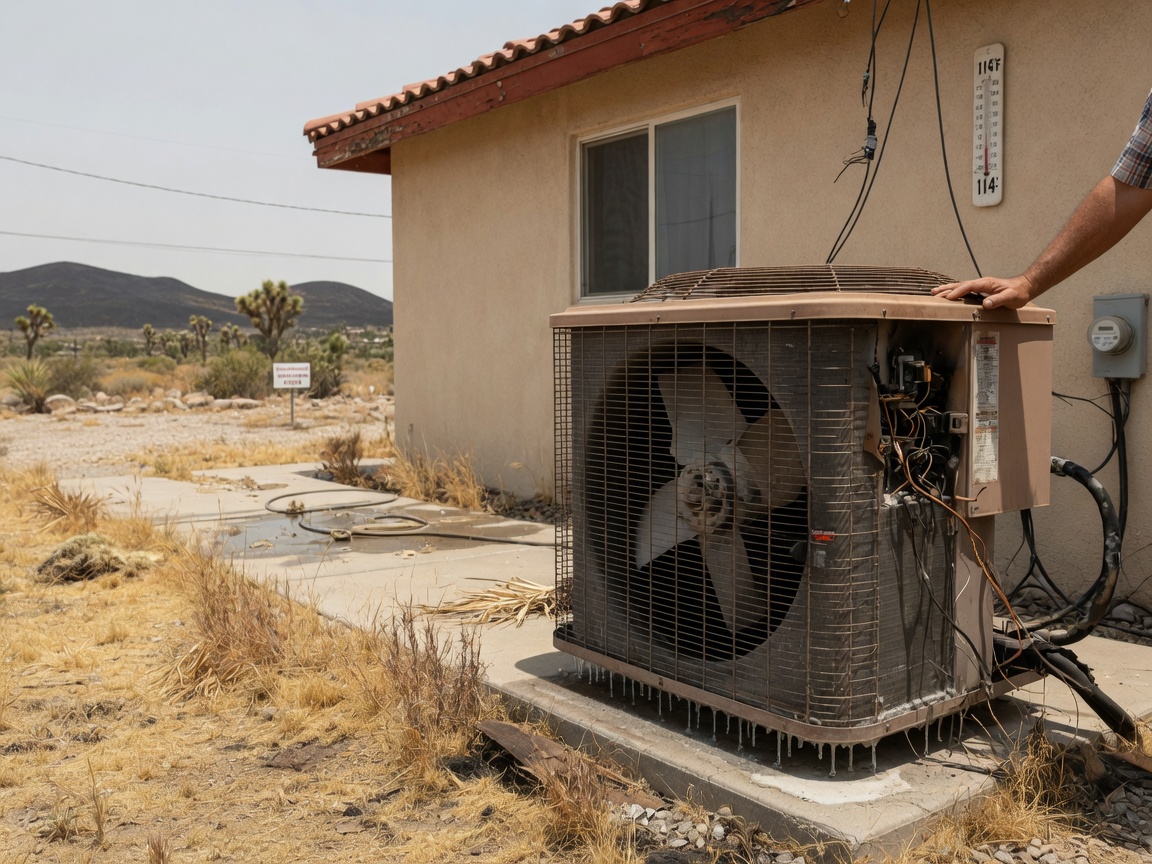
AC short cycling in Boulder City summers typically starts from dirty filters loaded with desert dust, low refrigerant leaks sped up by 110-degree days, or thermostats mounted in direct sun on older Clark County homes. These issues cut run times to under 10 minutes and raise energy use while wearing compressors faster in the hot desert climate.
Dust Accumulation and Filter Clogs in the Mojave Heat
Desert dust blows constantly across Boulder City, especially near the Boulder City Municipal Golf Course and areas downwind from Hoover Dam construction zones. Particles settle on evaporator coils and clog filters within weeks during peak summer, restricting airflow so the system overheats and shuts off prematurely. Homeowners in Lakeview often see this after just three weeks of 100-plus temperatures because wind carries fine silt from surrounding dry lake beds. Checking and replacing filters every 10-14 days prevents most short cycling tied to airflow. How Desert Dust Affects AC Performance in Boulder City explains the exact particle sizes common here and how they embed in fins.
Thermostat Placement Problems in Downtown Boulder City Homes
Many homes built before 1980 in Downtown Boulder City have thermostats installed on exterior walls that face south or west, where afternoon sun pushes readings 10-15 degrees higher than actual room temperature. The AC runs briefly then stops once the sensor hits its set point, even though the living space remains warm. Shifting the thermostat to an interior wall away from windows or adding a smart model with remote sensors corrects the cycle timing. In Lakeview tract homes the same problem appears when units sit near kitchen heat sources that spike during evening hours.
Low Refrigerant from Heat-Stressed Lines
Clark County summers push refrigerant lines to their limits, and small leaks at flare fittings or Schrader valves open faster when daytime highs exceed 105 degrees for weeks. Once charge drops below 80 percent of factory spec, the low-pressure switch trips and the compressor short cycles. Technicians in Boulder City commonly find R-22 systems from the 1990s leaking at the outdoor coil after 12-15 years of constant high-head pressure. Recharging without leak repair only masks the issue until the next heat wave. Typical AC Repair Costs for Boulder City Homes outlines pressure test steps used on local equipment.
Oversized Units and Short Run Times
Some homes in Boulder City received oversized AC units during the 2000s building boom to handle peak loads, yet these systems cool the space too quickly and shut down before dehumidification occurs. The result is short cycles of 5-8 minutes followed by rapid temperature swings. Proper sizing accounts for the mild winter lows that never stress the same equipment the way 115-degree afternoons do. Matching capacity to the actual square footage and insulation levels of Lakeview or Downtown Boulder City homes eliminates the on-off pattern.
Practical Steps to Diagnose Short Cycling Locally
Start by noting cycle length with a stopwatch during the hottest part of the day. Next inspect the filter and outdoor coil for dust mats that form quickly here. Measure supply and return temperatures at the vents; a difference under 15 degrees often signals low airflow or refrigerant loss. If these checks do not resolve the pattern, schedule a service visit to test capacitor values and pressure switches that fail more often under continuous desert loads. AC Repair addresses the exact components that trigger short cycling in Clark County equipment.